
Vet Myths
During my internship at an animal hospital, I noticed that many pet owners often asked veterinarians the same questions about their pets' health and daily care. This inspired me to create “Top 10 Common Veterinary Myths,” a guide that addresses common misunderstandings and provides clear, easy-to-understand explanations. Through this project, I hoped to help pet owners better understand their animals' needs and make more informed decisions about their pets' health.
1.
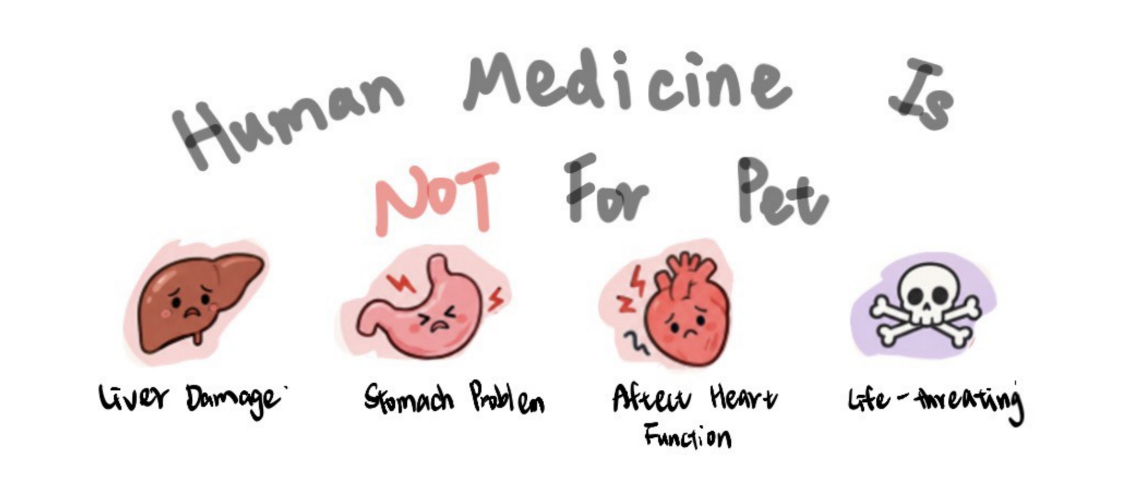
Never Give Your Pet Human Medication Without Veterinary Advice
Animals process medications differently from humans. Medicines that are safe for people can poison pets or even cause death. The main ingredient in Panadol, acetaminophen, is highly toxic to cats. Dog owners should never give it to their dogs without veterinary advice either. Although some human medications can be used in animals, they must only be given as directed by a veterinarian. Do not simply reduce an adult dose based on your pet’s weight.
*If your pet accidentally swallows medication, contact a veterinary clinic immediately. Record the name of the medication, the amount swallowed, and the time it happened.
2.
Veterinary Medicine Has Different Specialties—Seek the Right Care for Your Pet
Veterinary medicine includes specialties such as internal medicine, surgery, ophthalmology, dermatology, cardiology, neurology, oncology, and dentistry. For example, persistent itching or repeated skin infections may require a dermatologist’s evaluation, while eye pain or changes in vision may require an eye specialist.
Pet owners do not need to decide which specialist to see on their own. A general veterinarian can examine the pet first and refer them to a specialist if needed. When booking an appointment, you can also ask whether the clinic offers the relevant services and about the veterinarian’s expertise and qualifications.
3.
Changing Clinics or Seeing a Specialist? Prepare Your Pet’s Medical Records
When changing veterinary clinics or getting a referral, ask your current clinic how to obtain your pet’s medical summary, blood and urine test reports, diagnostic images, and medication records. Share these with the new clinic. Do not assume the new clinic can automatically access all previous records.
Complete reports should include the test date, results, units, and reference ranges. Whenever possible, provide the original digital files for diagnostic images. Previous records help veterinarians track changes in your pet’s condition. However, tests may need to be repeated depending on how old the records are, their quality, and your pet’s current condition. Before your appointment, confirm with both clinics how the records should be formatted and transferred.
4.
Pets Need Vaccinations, but Vaccine Types and Schedules Should Be Personalized
Vaccines can reduce the risk of certain infectious diseases, so dogs and cats need vaccinations on an appropriate schedule. Common examples include rabies vaccines for dogs and the three-in-one vaccine for cats. However, a veterinarian should assess which vaccines your pet needs, when they should be given, and the interval between doses.


5.
When Your Pet Is Sick, Seek a Veterinary Diagnosis Instead of Using Online Home Remedies
The internet can help you learn about basic pet care, but similar symptoms may be caused by different diseases. Do not choose a treatment based only on videos, posts, or other pet owners’ experiences. Using home remedies, leftover medication, or medication prescribed for another animal may cause harm and delay diagnosis.
Record when the symptoms started, how often they occur, and any recent changes in your pet’s diet or living environment. If the symptoms are unlikely to appear during the appointment, you can record a video to help the veterinarian assess your pet’s condition.

6.
All Pets Need Regular Health Checkups
A health checkup involves more than blood tests. It also includes assessing your pet’s weight, body condition, mouth and teeth, skin, heart and lungs, and mobility. Even pets that seem active and alert may have health problems that are not yet obvious.
Pets should generally have a veterinary checkup at least once a year. Senior pets often need an assessment every six months, while pets with chronic conditions may need more frequent visits. Blood tests, urine tests, and diagnostic imaging should be recommended based on each pet’s individual risks. Keeping regular health records also helps track changes over time.
7.
Choosing the Right Diet for Your Pet: Look Beyond Labels and Use Supplements Wisely
Young, adult, and senior pets may have different dietary needs. Their size, activity level, body condition, and medical conditions also affect these needs. Breed can be a useful consideration, but a breed label or “senior formula” on the packaging does not automatically make a food the best choice. Your pet’s individual condition should also be assessed.
A complete and balanced main diet is more important than buying many supplements. Before giving supplements, tell your veterinarian about their ingredients and doses, as well as the food your pet currently eats. This helps determine whether supplementation is necessary and whether nutrients may be duplicated. Supplements cannot replace the tests and treatment needed for a medical condition.

8.
Abnormal Bowel Movements May Involve More Than Digestive Problems—Watch for Other Symptoms
Observe the consistency, color, and frequency of your pet’s stools. Check for blood or mucus, and notice whether your pet strains or seems to feel pain when passing stools. During the appointment, tell the veterinarian about any vomiting, reduced appetite, low energy, or weight changes.
These details help the veterinarian assess your pet’s condition. Do not give anti-diarrhea medication on your own simply because your pet has diarrhea. If abnormal bowel movements persist, keep recurring, or occur with obvious discomfort, contact a veterinarian.

9.

Before Getting a Pet, Plan for Medical Expenses and Long-Term Care
In Taiwan, veterinary care is not covered by the National Health Insurance system for people, so pet owners need to plan a medical budget in advance. Besides food and supplies, consider the costs of vaccinations, parasite prevention, health checkups, dental care, unexpected illnesses, hospitalization, and surgery.
Set aside money regularly for a pet medical emergency fund. If you are considering pet insurance, carefully review its coverage, reimbursement limits, deductibles, and exclusions. During appointments, you can also explain your budget and ask the veterinarian about the necessity, priority, and estimated cost of recommended tests. This can help you make practical decisions about your pet’s care.
10.
Changes in Water Intake, Urination, Food Intake, and Weight May Be Early Signs of Illness
Pets cannot tell us in words when they feel unwell, so owners need to know their usual habits. Changes to watch for include suddenly drinking more water, urinating more, eating less, or gradually losing weight despite eating more. For example, increased thirst and urination, along with weight loss, can occur with conditions such as diabetes. Veterinary tests are needed to confirm the cause.
However, small changes do not necessarily mean a serious illness. Weather, activity levels, and diet can also affect these patterns. Pay attention to whether the changes persist, differ noticeably from your pet’s normal habits, or occur with other symptoms. Weigh your pet regularly and record food intake, the amount of water added to their bowl, and urination patterns to share with the veterinarian. Do not wait until your pet becomes noticeably weak before paying attention to these everyday clues.